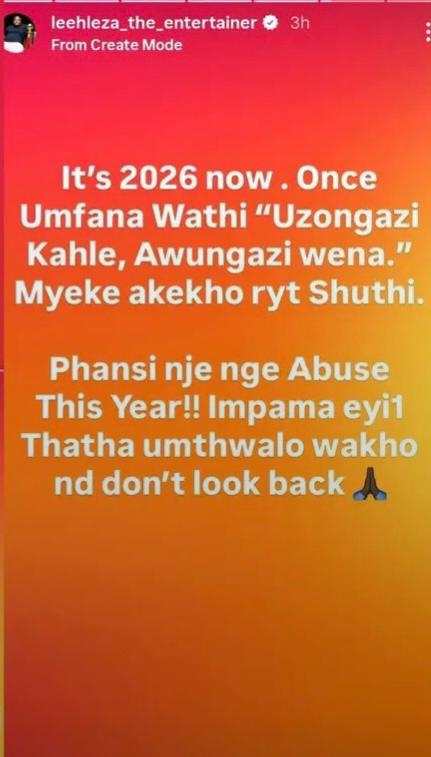






Leehleza is using his voice for more than just music as he addresses one of South Africa’s most pressing social issues — gender-based violence (GBV) and toxic relationships. The artist, who continues to make waves in the music industry, recently took to social media to speak out strongly against abuse, calling on people to recognize the warning signs and remove themselves from harmful situations.
Through his Instagram Stories, Leehleza shared a powerful message that resonated with many. In his post, he wrote, “It’s 2026 now. Once Umfana Wathi ‘Uzongaz kahle, awungazi wena.’ Myeke akekho ryt. Shuthi phansi nje nge abuse this year!! Impama eyit thatha umthwalo wakhe and don’t look back.” His words carried a clear message: abuse should never be tolerated, and walking away is not weakness but self-preservation.
Leehleza went on to emphasize that abusive behavior often starts with warning signs that should never be ignored. He added, “Ai kabi neh ma. But signs of an abusive BF are always there!! First mpama nje why ungayeki lomuntu??” This statement highlighted a painful reality — that many abusive relationships show red flags early on, yet victims often feel trapped or hopeful that things will change.
By speaking so openly, Leehleza sparked important conversations online about accountability, awareness, and self-worth. His message encouraged people, especially women, to take abuse seriously from the very first incident and to prioritize their safety and mental well-being. In a country where GBV remains a major crisis, such public statements from influential figures play a crucial role in shifting mindsets.
The artist’s stance also challenges the normalization of toxic behavior in relationships. His words suggest that love should never come with fear, violence, or emotional manipulation. By urging people not to “look back,” Leehleza reinforced the idea that leaving an abusive relationship is a necessary step toward healing and freedom.
Fans praised Leehleza for using his platform responsibly, noting that artists speaking out on social issues can inspire real change. Many related to his message, sharing their own experiences and thanking him for addressing a topic that is often silenced or ignored.
As Leehleza continues to grow in his career, his willingness to confront difficult realities shows maturity and social awareness. His message is a reminder that ending GBV requires collective effort, honest conversations, and the courage to walk away from toxicity. In 2026, as he puts it, abuse should no longer have a place — in relationships or in society.